

In this blog
The wood feels warm. A ladle of water hits the stones with a hiss, and for a moment the rising heat seems to be everywhere. Outside, dusk is settling. In here, the day can come to a gentle close.
Perhaps this is the moment you will remember from a holiday in Finland. No grand event, just an evening when your thoughts gradually settle. The Finnish sauna provides a familiar setting for such moments. Its history also reaches into parts of life we rarely think about when bathing today: birth and farewell, work, celebrations and belief in unseen inhabitants.
A warm room for every stage of life
On a Finnish farm, the sauna could serve several purposes at once. It offered a heated space and warm water for washing. Women gave birth there, and the deceased were washed there before burial. The sauna thus played a part in very different transitions in life.
There were practical reasons too. A separate, warm room with water served purposes for which the house did not always have a suitable space. In an article on ThisisFINLAND, the Finnish Sauna Society also explains that, when establishing a new home, people could build the sauna first and live in it temporarily. The historical uses of the sauna
Knowing this changes how we see the wooden bench and stove. Such a simple building could hold deeply personal memories. Warmth was part of everyday life and also accompanied moments when people needed shelter and privacy.
Why the sauna was considered a special place
In his essay on the sanctity of sauna, Pentti Tuohimaa describes how closely this space was associated with respect, inherited customs and the idea of a boundary between everyday life and something special. He interprets silence and the removal of outward signs of status, for example, as expressions of this significance. Finnish Sauna Society
The word “sacred” need not mean the same thing to everyone. For guests today, an evening deliberately set aside can already feel special: no more appointments, no next activity, no reason to keep checking the phone.
The sauna’s earlier religious significance and our present-day need for peace are different things. Even so, it is easy to understand why people value a room where they can retreat and show consideration for one another.
Saunatonttu and the unseen inhabitants
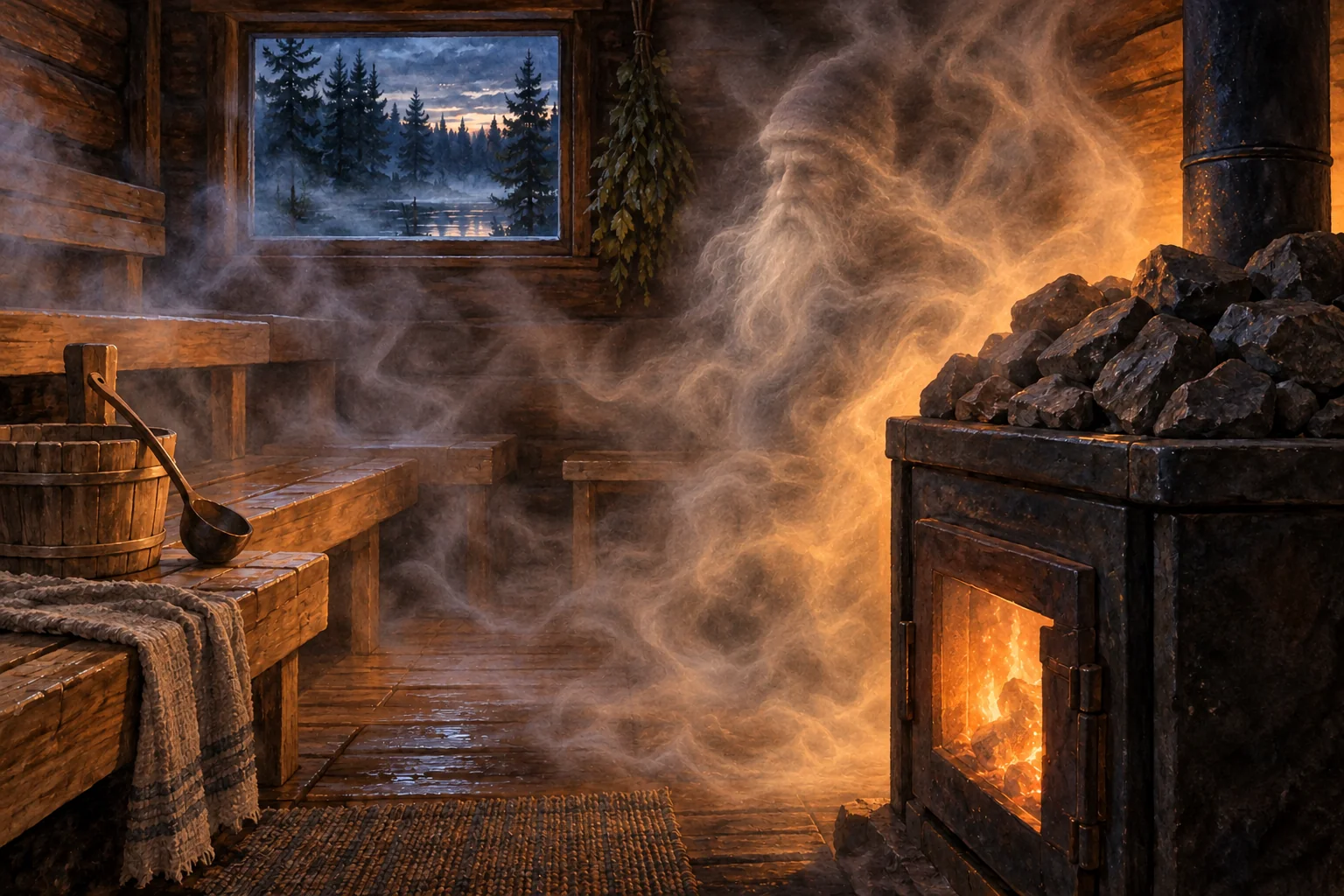
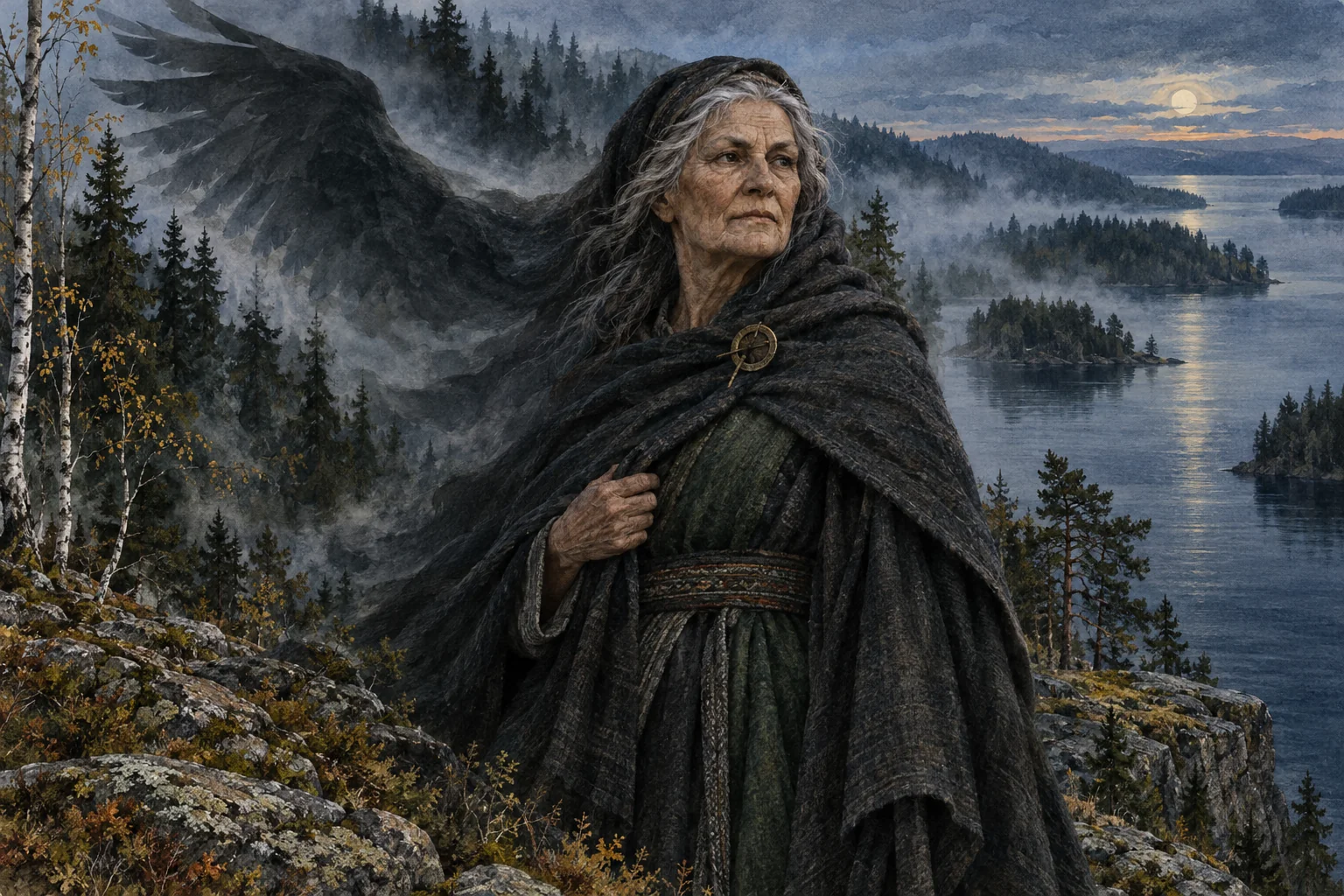
Finnish folk belief includes the Saunatonttu, the sauna spirit. If the name makes you picture a friendly little wooden figure, you know only one possible depiction. In the traditions described by the Finnish Literature Society, the sauna spirit could take different forms, such as an old man or a young girl. It could also become dangerous when angered.
Special rules applied particularly to the Christmas sauna. People were expected to behave quietly and finish in good time. According to one belief, the unseen inhabitants took their turn after the human bathers. Water was left for them. Saunatonttu and the Christmas sauna at SKS
These stories give the room a character of its own. Even if nobody today expects a spirit behind the stove, they offer a sense of how the sauna was once approached: it was a place that deserved respect.
Löyly and the rhythm of a sauna evening
One word you will hear repeatedly in Finland is löyly. It describes the steam and heat produced when water is poured onto the hot stove stones. Kiuas means the sauna stove.
Sauna bathing involves alternating warmth with cooling down. How long to stay, how much steam feels comfortable and when to take a break depend on how you feel. Preparing and heating the sauna can already be part of the pleasure. Finland’s inventory of living heritage explicitly describes this variety. Sauna bathing as a living tradition
It is a lovely thought for an evening on holiday. The pause between sauna sessions need not be filled. You can stay seated, have a drink and look outside. Perhaps that is when you notice the small things: a treetop moving or the last light over the water.
Sharing silence and conversation
The image of a completely silent Finnish sauna has its appeal. Yet it tells only part of the cultural story. Conversations with family and friends belong here too. ThisisFINLAND explicitly describes the sauna as a place for relaxation, conversation and connection with nature. Sauna culture in Finland today
A peaceful evening can include both. Someone first talks about the day; later, everyone sits quietly for a while. Nobody needs to break the silence immediately. Nor must every conversation stop for a sauna session to be “properly Finnish”.
The sauna is also associated with the idea that visible differences become less important. Clothing, professional roles and social standing recede. Tuohimaa describes this as a form of equality on the sauna bench. It is a cultural ideal that can give shared sauna bathing a special quality. The idea of equality
The bridal sauna and preparing for a new chapter
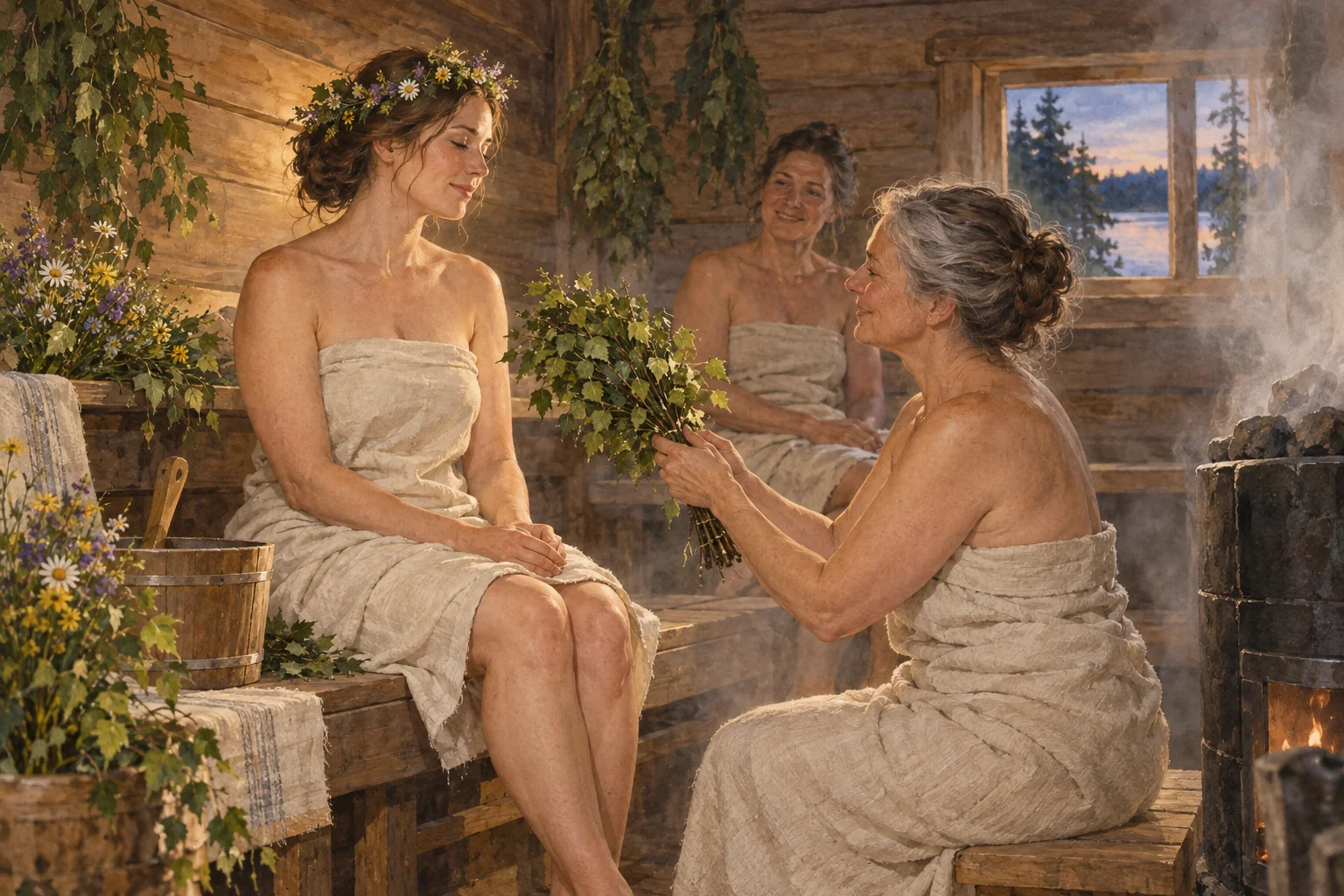
A particularly interesting tradition is Morsiussauna, the bridal sauna. It is connected with Finnish and Karelian wedding customs and centres on preparing the bride for a new chapter in life.
The inventory of living heritage describes present-day traditional bridal saunas with, for example, flowers and greenery, a special place for the bride, songs and ritual washing. Such practices are maintained both privately and by people who work professionally with sauna traditions. Their form can vary. Traditional sauna practices
They can also be seen as a form of shared attention: for a moment, one person is the focus, while others support her through a change. This present-day perspective helps explain why rituals marking transitions can still resonate with people.
From the Christmas sauna to Juhannus
The sauna also accompanies the seasons. Joulusauna means the Christmas sauna; Juhannussauna is the Midsummer sauna. Alongside these celebrations, Saturday is a traditional sauna day, though people naturally bathe on other days too. Sauna in everyday life and celebrations
This alternation is part of what makes the tradition interesting. The same room can be used after an ordinary working week and then become part of a celebration. The occasion changes the atmosphere, although the stove and benches remain the same.
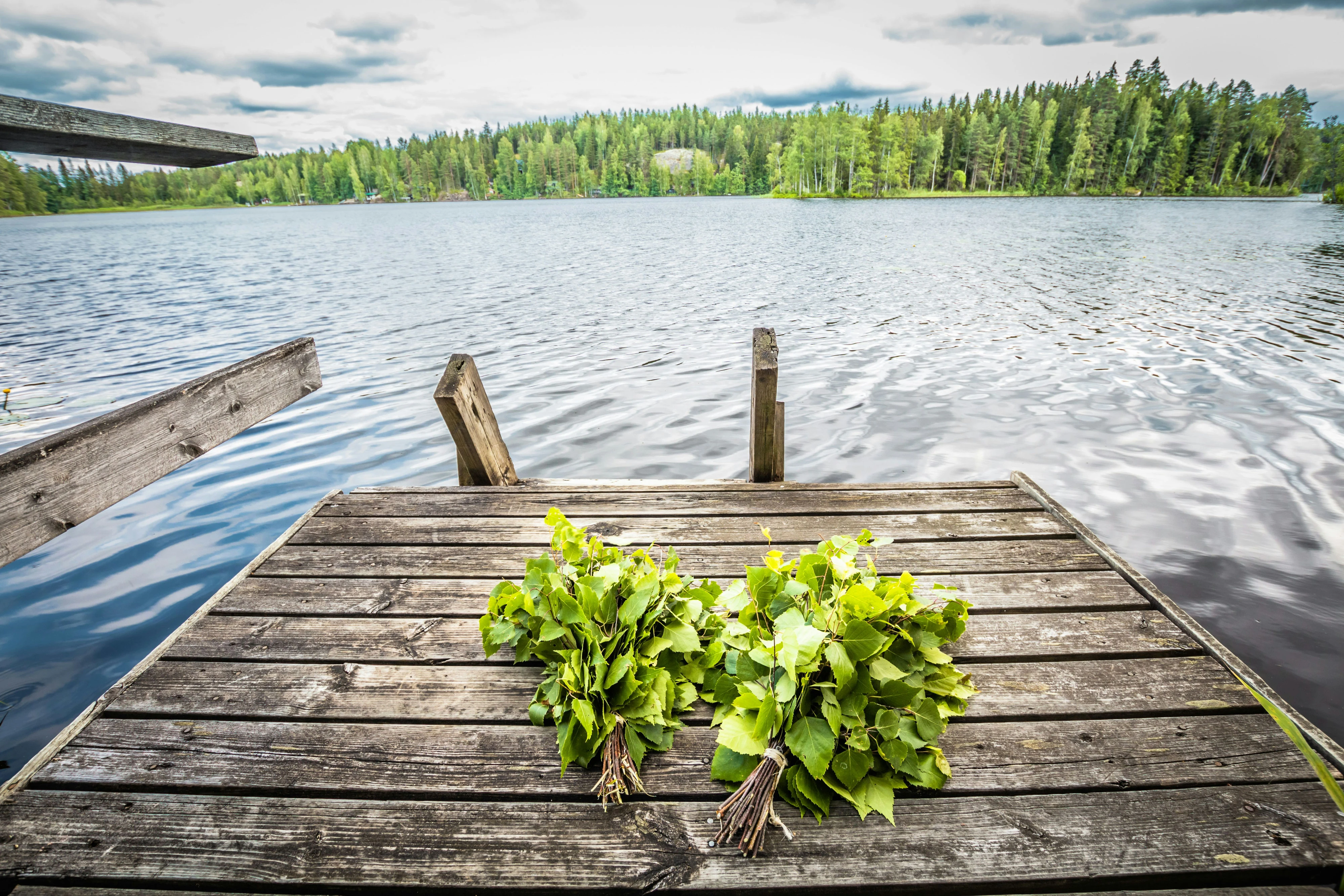
If you are interested in its summer side, our blog about Juhannus and the bright nights explores Finnish Midsummer customs. The birch branches sometimes used in sauna bathing have their own article about the vihta.
Experience sauna culture at Mökki Tikka
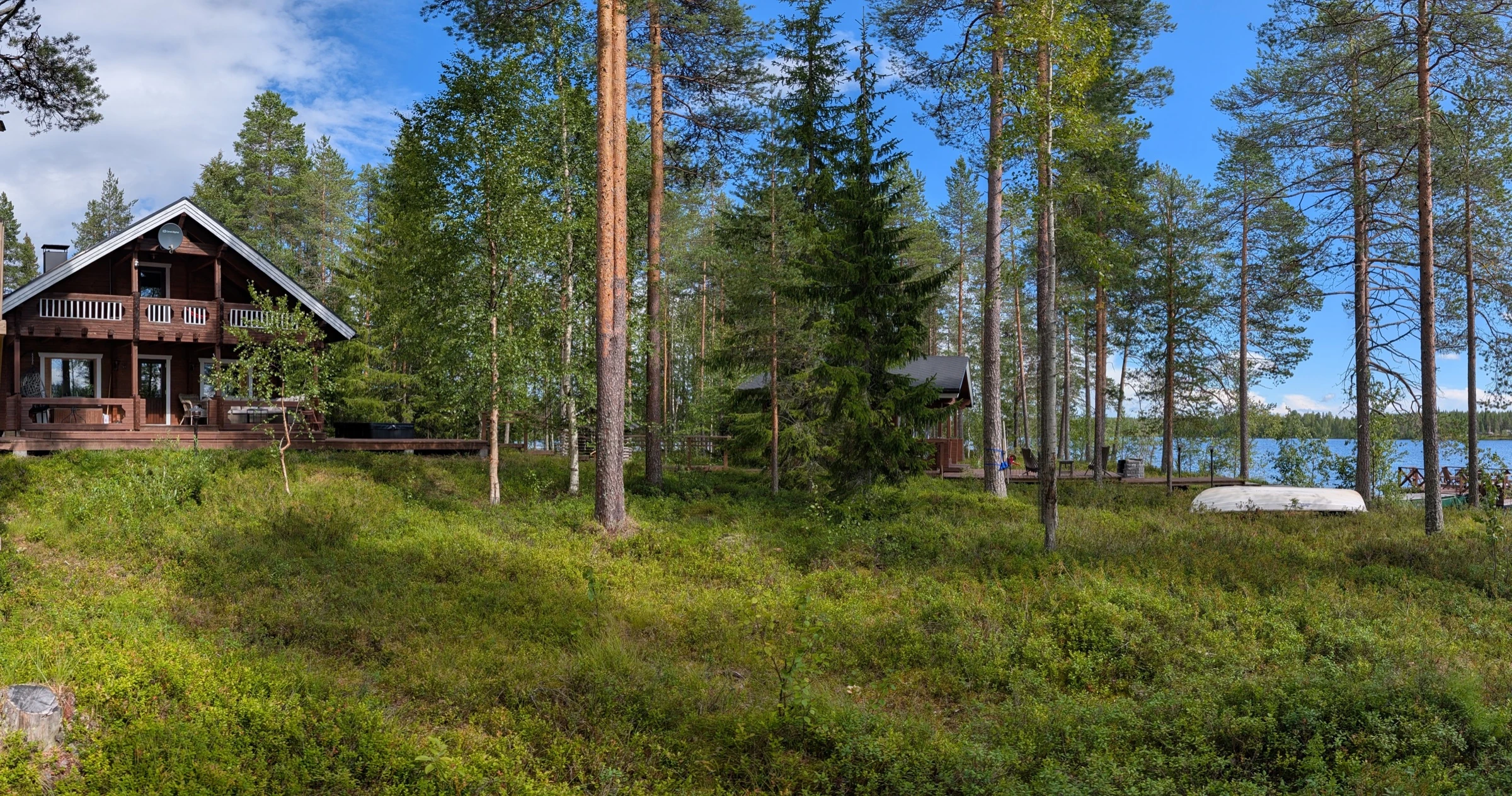
At Mökki Tikka, you have the sauna in the main house and the wood-heated sauna in the lakeside sauna house at your disposal. A sauna evening fits into your holiday without an extra excursion. Koirajärvi, the trees and time for yourself or your travelling companions provide the setting.
After a day outdoors, it can be pleasant to leave the evening open. Warmth, a break in the fresh air and a drink can be enough. A dip in the cold lake is not a requirement.
Finnish sauna culture has been on UNESCO’s Representative List of the Intangible Cultural Heritage of Humanity since 2020. This recognises a tradition that people practise and pass on. Finnish Heritage Agency
You do not need to memorise this history for your own sauna evening. Perhaps the thought will simply stay with you that many people before you have found peace in such a room, shared conversations and begun special days. As the light fades outside and water hisses on the stones, this long history becomes a very present moment.
Frequently asked questions about the Finnish sauna
Must you stay silent in a Finnish sauna?
No. Both silence and conversation belong to sauna culture. What matters is consideration for the other bathers.
What does löyly mean?
Löyly describes the steam and heat created by pouring water onto the hot stove stones.
Were children really born in saunas in the past?
Yes. The sauna was also used for childbirth. It could be heated and provided warm water; its historical uses extended far beyond today’s sauna bathing.
What is a Saunatonttu?
A sauna spirit from Finnish folk belief. In traditional accounts it demanded respectful behaviour and was not always friendly.
Must I go into the cold lake after the sauna?
No. You can take your break in the fresh air and cool down at your own pace.
The cabinExperiences & regionJournal